

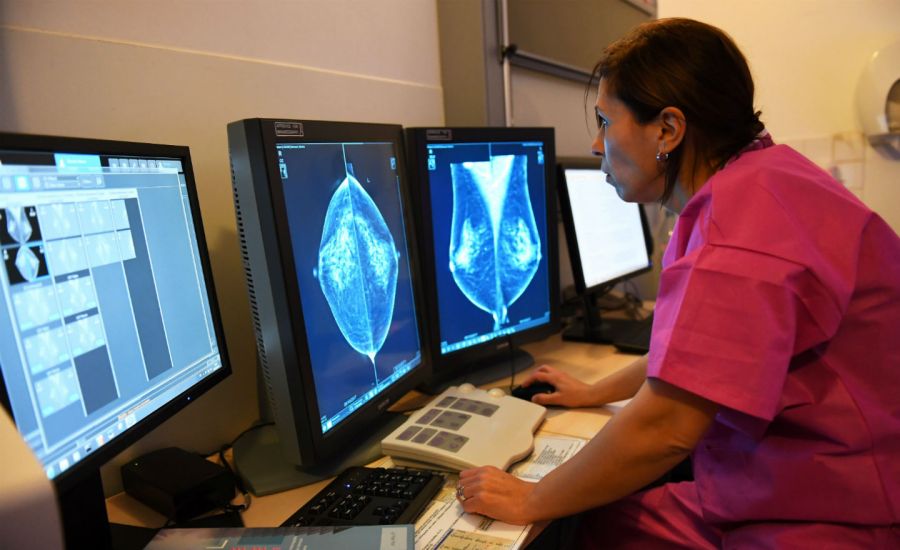
Women should start regular mammography screenings at age 40 and continue every other year until age 74, an expert advisory panel said Tuesday.
Citing the increase in breast cancer among younger women, the U.S. Preventive Service Task Force (USPSTF) changed their previous guidance, which recommended biennial mammograms starting by age 50, but said the decision for women in their 40s “should be an individual one.”
“Fundamentally, this is a shift from recommending that women start screening between the ages of 40 and 50, to recommending that all women start getting screened when they turn 40,” the panel wrote.
The task force is a volunteer panel of medical experts that issues recommendations on preventive health, which are usually widely adopted. The Affordable Care Act requires insurers to cover, without cost-sharing, more than 100 preventive health services recommended by the task force.
“More women in their 40s have been getting breast cancer, with rates increasing about 2 percent each year, so this recommendation will make a big difference for people across the country,” USPSTF Chair Wanda Nicholson said in a statement. “By starting to screen all women at age 40, we can save nearly 20 percent more lives from breast cancer overall.”
Breast cancer is the second most common cancer in women in the United States, after skin, and it’s the second-leading cause of cancer death, after lung cancer.
The recommendation applies to women at average risk of breast cancer, as well as those with a family history of breast cancer and those with dense breasts.
The recommendation does not apply to people who have a personal history of breast cancer, who are at very high risk of breast cancer due to certain genetic markers such as the BRCA1 or BRCA2 genes, those with a history of high-dose radiation therapy to their chest at a young age, or who have had a high-risk lesion on previous biopsies.
The updated recommendation was also aimed at addressing racial disparities in breast cancer diagnosis and survival rates. According to the USPSTF, Black women are 40 percent more likely to die from breast cancer compared to white women.
“We need to know how best to address health disparities across screening and treatment experienced by Black, Hispanic, Latina, Asian, Pacific Islander, Native American, and Alaska Native women,” the group wrote.
But the task force said there was not enough evidence to endorse extra scans for women with dense breast tissue.
“Nearly half of all women have dense breasts, which increases their risk for breast cancer and means that mammograms may not work as well for them. We need more studies that show how additional screening with breast ultrasound or MRI might help women with dense breasts,” the task force said in a statement.
Not endorsing the scans means insurers don’t have to cover them. The Food and Drug Administration last year required all U.S. screening facilities notify patients about the density of their breasts with their mammography results.
Congressional women’s health advocates including Rep. Rosa DeLauro (D-Conn.) said the recommendations were a mixed bag.
Lowering the age to 40 was a positive step, DeLauro said, but she is “very disappointed” that the task force didn’t recommend additional screening for women with dense breasts.
That decision “will guarantee insurers do not cover ultrasounds or MRIs that are more likely to find cancer in women with dense breasts,” DeLauro said.
“Because of the Task Force’s failure to issue a recommendation that would ensure women have these additional screenings covered, I fear women may forgo these screenings entirely if their insurance does not cover it. This threatens the health outcomes of women and in the worst cases, their lives,” she said.
Other experts and patient advocates also took issue with the every-other-year screening recommendation.
The American College of Radiology has been urging the panel to recommend all women have a breast cancer risk assessment by age 25, and that women at average risk for breast cancer receive an annual mammography screening starting at age 40.
Ann Partridge, director of the program for young adults with breast cancer at Dana-Farber Cancer Institute, said the updates are a positive development but expressed concern that the biennial schedule “may lead to even less screening among some populations, and result in more cancers ultimately being detected at advanced stages.”
Partridge said patients and doctors should make tailored decisions regarding the frequency of screening for breast cancer, with the option of screening annually.